Welcome to the INTechHouse blog, where innovation meets information. In this edition, we delve into the intriguing realm of Data Mesh Architecture, exploring its significance, evaluating its merits, and uncovering how INTechHouse tailors this cutting-edge concept to amplify data-driven excellence
What is Data Mesh?
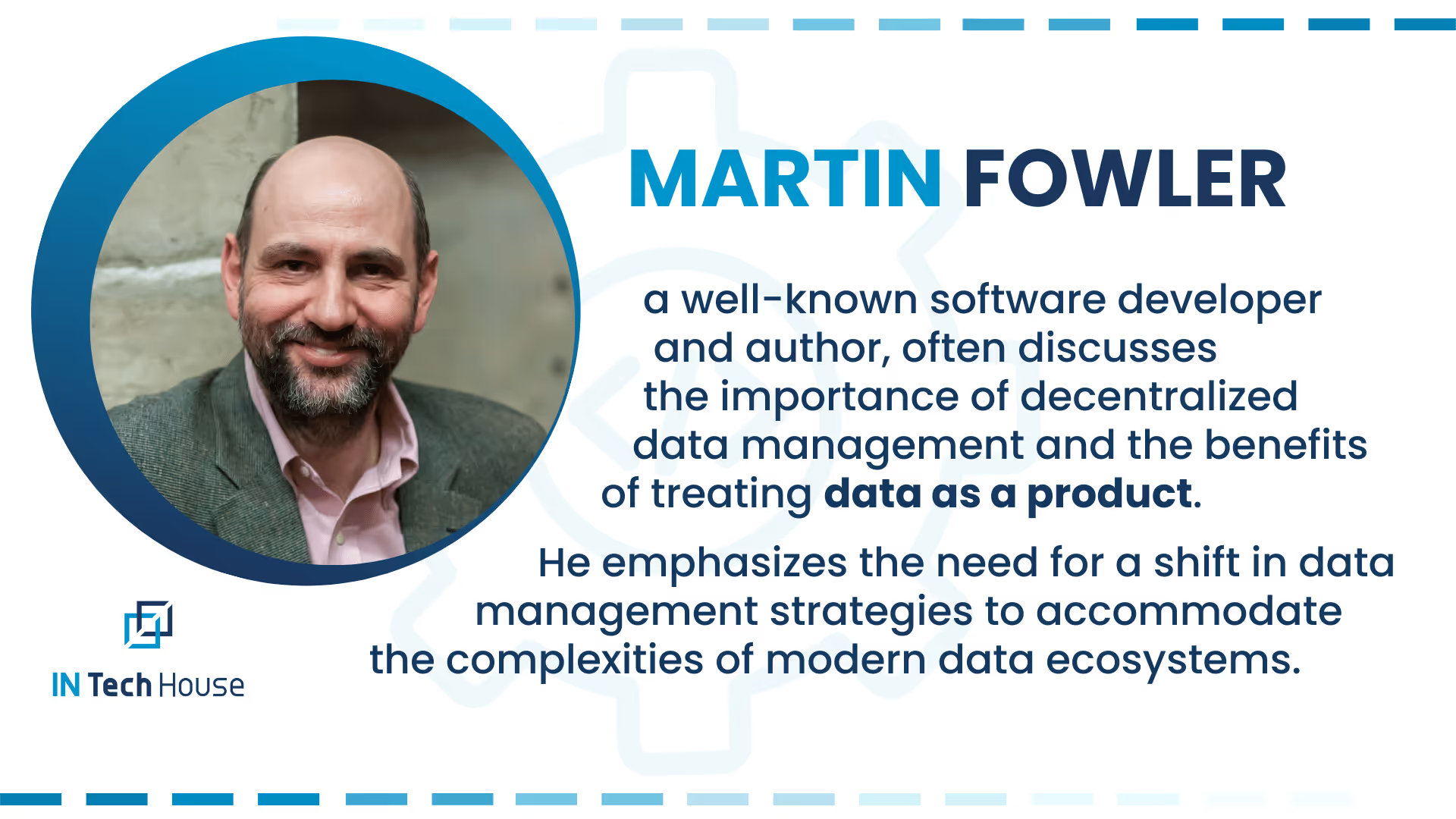
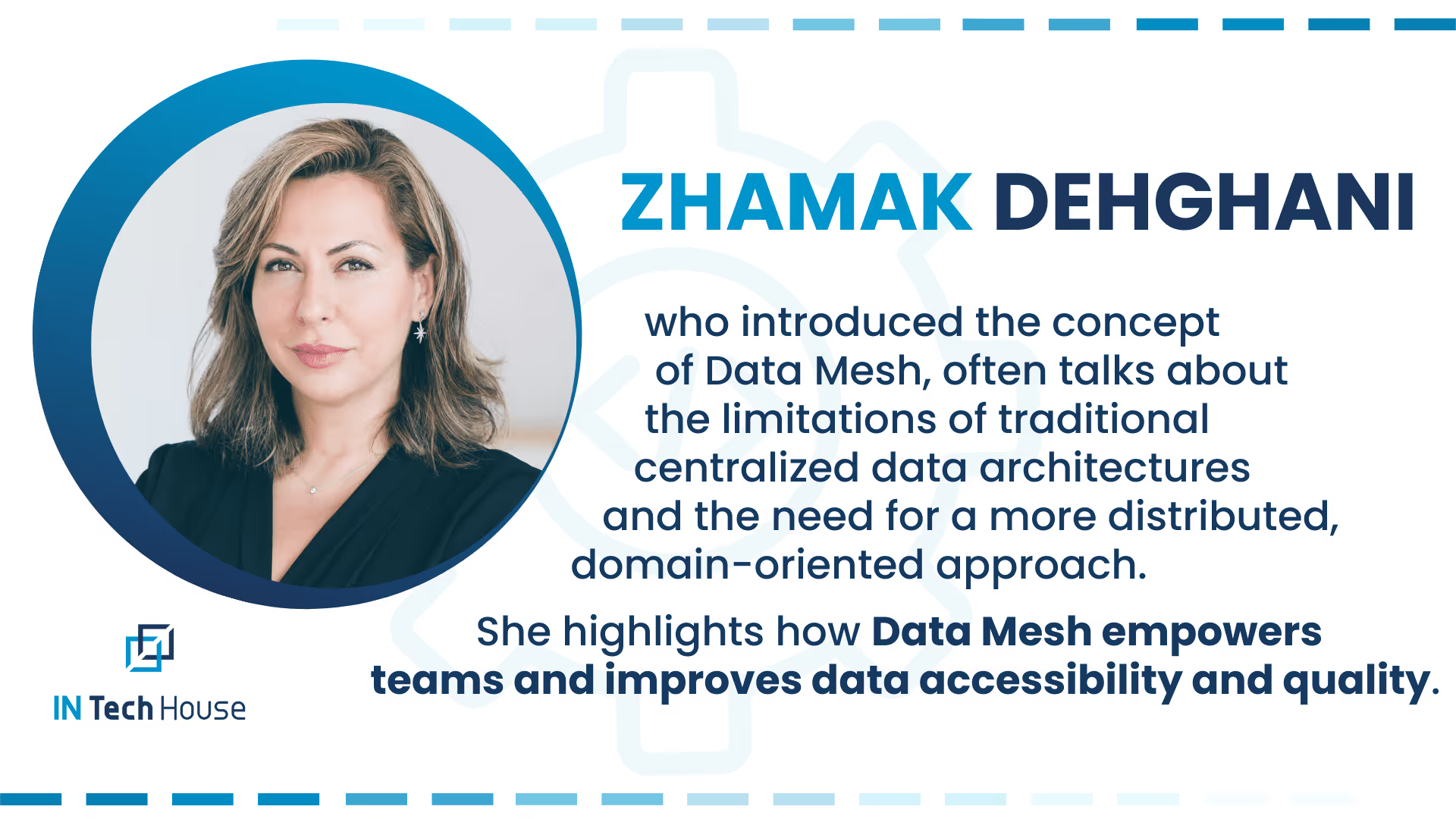
Data Mesh is a paradigm shift in the way organizations approach data architecture. Coined by Zhamak Dehghani, the concept promotes a decentralized approach to data ownership, access, and quality, empowering domain-oriented decentralized data teams. In simpler terms, it envisions breaking down monolithic data systems into a distributed and federated architecture, aligning seamlessly with the principles of scalability, autonomy, and flexibility. Modern data is a key to success! 100% What’s more – Data should be a Product in 2024 and beyond.
Is Data Mesh a Good Idea?
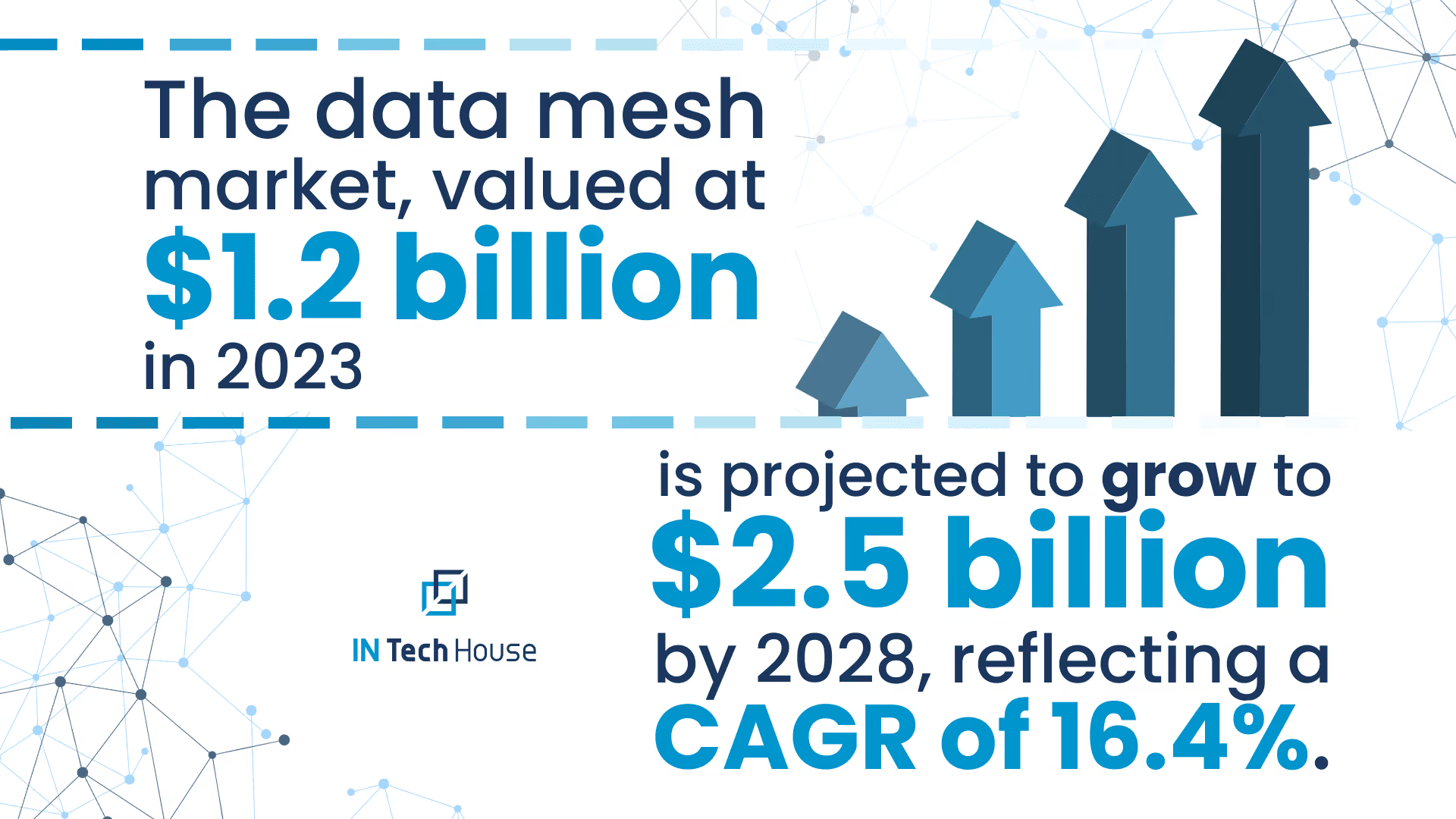
At INTechHouse, we can say ABSOLUTELY! Data Mesh addresses the challenges posed by traditional centralized data architectures. By distributing data ownership to domain-oriented teams, it fosters a culture of data autonomy, allowing teams to be accountable for the quality and usability of their data. This approach enhances scalability, accelerates innovation, and promotes a more responsive and adaptive data infrastructure, which is especially crucial in today’s rapidly evolving business landscape. Data and Big Data are crucial, too! What about the market?
Understanding Data Mesh involves grasping its foundational pillars, each playing a crucial role in reshaping the data landscape: Domain-oriented Decentralized Data Ownership:
INTechHouse Edition: At INTechHouse, we champion domain-oriented decentralized data ownership by aligning our data teams with specific business domains. This approach ensures that the teams responsible for data understand the intricacies and requirements unique to their respective domains.
Data as a Product:
INTechHouse Edition: We treat data as a valuable product, with dedicated teams responsible for its lifecycle. This ensures that data is not just a byproduct of operations but a strategic asset cultivated, refined, and delivered with precision.
Self-serve Data Infrastructure as a Platform:
INTechHouse Edition: Our approach involves providing self-serve data infrastructure platforms that empower teams to manage, access, and derive insights from their data autonomously. This ensures efficiency and agility in data utilization.
Federated Computational Ecosystem:
INTechHouse Edition: We foster a federated computational ecosystem where data and computational resources are distributed and interconnected. This enables seamless collaboration and resource-sharing among different domain-oriented teams, amplifying the collective intelligence of the organization.
What is a Real World Example of Data Mesh?
E-commerce Personalization:
In the world of e-commerce, Data Mesh is revolutionizing how customer data is managed. Each domain, such as product recommendations, user behavior, and inventory management, has dedicated teams overseeing their data. This approach enhances personalization, agility, and the overall customer experience.
Healthcare Data Integration:
In healthcare, Data Mesh is breaking down silos to improve patient care. By assigning data domains to specific medical specialties – radiology, patient records, pharmaceuticals – healthcare providers can achieve a holistic view of patient health while ensuring data accuracy and compliance.
Financial Services Analytics:
Financial institutions leverage Data Mesh to streamline analytics. Each financial product, from loans to investments, has its data domain. This empowers specialized teams to manage data efficiently, leading to more accurate risk assessments, personalized financial insights, and improved decision-making.
What are the Downsides of Data Mesh?
Complex Implementation:
While the principles of Data Mesh offer benefits, implementing the architecture can be complex. Shifting from a centralized to a decentralized model requires a significant organizational change, demanding time, resources, and careful planning.
Data Governance Challenges:
Decentralization can pose challenges in maintaining a unified data governance strategy. Ensuring consistent standards, security, and compliance across diverse data domains may prove challenging, potentially leading to data quality issues.
Skill Set Requirements:
Transitioning to Data Mesh may require a shift in the skill sets of data professionals. Teams need to adapt to a more autonomous and collaborative model, which may necessitate training and upskilling efforts.
Potential for Increased Complexity:
Introducing a federated computational ecosystem might lead to increased complexity in managing interconnected data and computational resources. This complexity could potentially outweigh the benefits for smaller organizations or those without the necessary infrastructure.
How To Design a Data Mesh?
Designing a Data Mesh is an art as much as it is a science. At INTechHouse, our approach is nuanced, balancing the need for decentralization with the strategic orchestration of data domains. It starts with a comprehensive assessment of organizational needs, understanding specific data requirements within different business domains. By fostering domain-oriented decentralized teams, we empower each unit to own, manage, and evolve their data, ensuring a harmonious blend of autonomy and cohesion. The design journey also involves creating self-serve data platforms, fostering a culture of collaboration, and leveraging cutting-edge technologies that amplify the strengths of a distributed data ecosystem.
What are the Benefits of a Data Mesh?
Data Mesh is a new chapter in business. If you use the data properly, you can run the wolrd. The benefits of a Data Mesh extend far beyond the realms of conventional data architectures. By embracing decentralization, organizations unlock agility, scalability, and innovation. Teams take ownership of their data domains, fostering a culture of accountability and empowerment. The self-serve data infrastructure enhances efficiency and responsiveness, while the federated computational ecosystem facilitates seamless collaboration. The INTechHouse edition of Data Mesh is not just a framework; it’s a paradigm shift that elevates data from a mere byproduct to a strategic asset, fueling innovation and excellence.
What is a Data Mesh Model?
The Data Mesh model empowers businesses with decentralized data excellence, aligning technology with cultural transformation for innovation and strategic data value. Principles:
Decentralization: Assign data domain ownership to teams.
Data as a Product: Treat data as a strategic asset with dedicated teams.
Self-Serve Infrastructure: Provide platforms for autonomous data access.
Federated Ecosystem: Foster collaborative, distributed data and computational resources.
Cultural Shift: Instigate a mindset where data is celebrated and owned by domain teams.
Benefits for Businesses:
Autonomy: Teams manage data domains independently.
Efficiency: Self-serve infrastructure promotes agile data utilization.
Innovation: Federated ecosystem encourages collaboration and insights cross-pollination.
Strategic Value: Treating data as a product enhances its strategic significance.
Cultural Transformation: Shift towards data ownership fosters a dynamic, innovative environment.
INTechHouse Data Expertise
Case 1 In the dynamic landscape of technology, reliability is paramount, especially for products with a legacy that spans decades. Our client, a multinational US corporation, found themselves at a crucial crossroads with a product that had been a beacon of reliability since the early 2000s. As the availability of spare parts dwindled, the future of this globally demanded product hung in the balance. Read it Case 2
FAQ
What are the key business functions in the Data Mesh market?Key business functions include finance & accounting, sales & marketing, research & development, operations & supply chain, HR, and ITSM. Who are the key vendors in the Data Mesh market?Major players include IBM, AWS, SAP, Oracle, Informatica, Google, Microsoft, and several others. Who is data product owner?This role oversees a specific data product, ensuring its quality and alignment with user needs and business goals. Do I need data scientists for my business?Depends on your business's reliance on data for decision-making and innovation. If data analysis is crucial, data scientists can be highly beneficial. Real-time data is better and why?Offers advantages like immediate decision-making and responsiveness, essential in sectors where timeliness is key. The importance varies based on business needs.