





IoT, Energy Monitoring & Data Platforms for Manufacturing
We design industrial data platforms, IoT systems, and AI solutions for manufacturing environments where machine data, energy usage, and asset performance directly impact operational efficiency. Our systems integrate OT and IT without disrupting production.








Connecting machines, infrastructure, and energy data
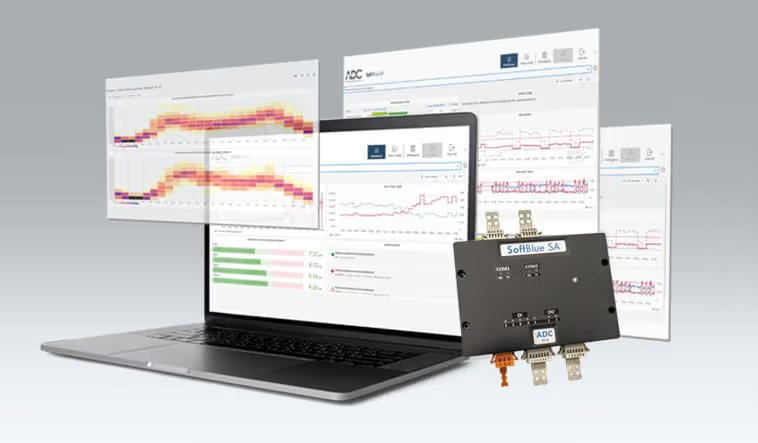
We design systems that connect production equipment, industrial infrastructure, and utility networks into a consistent data environment. This includes real-time data acquisition, edge processing, and integration across SCADA, PLC, MES, and ERP systems. Our focus is on enabling reliable data flow across sites and systems, supporting operational visibility without interfering with active production.
ISO 27001-aligned industrial networks delivered in active production environments
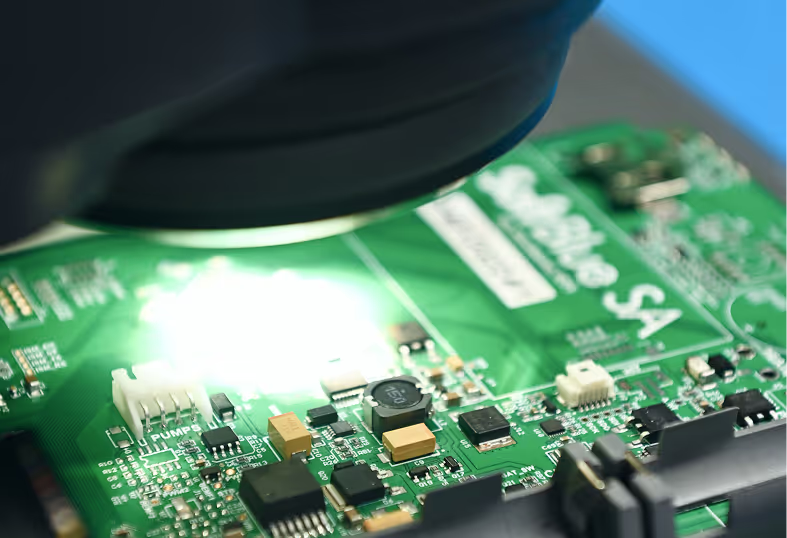
Granular energy consumption visibility
Energy monitoring systems collect detailed data across electricity, gas, water, and industrial utilities, enabling identification of inefficiencies and optimization opportunities.
Lower engineering cost
Compared to typical US/EU consulting and delivery models, without compromising on technical quality or production readiness.
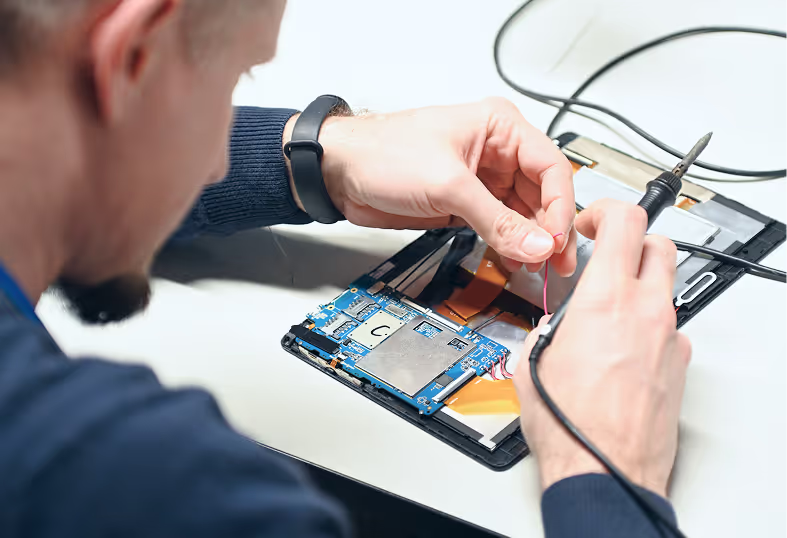
Extended system lifecycle
Hardware mid-life upgrades address component obsolescence and extend system usability without replacing entire production systems.
Engineering capabilities for industrial environments
We design systems for manufacturing organizations that require stable operations, scalable infrastructure, and direct integration between production and enterprise systems.
Industrial Data Platforms & OT/IT Integration
We design data architectures that integrate production systems with enterprise environments, enabling consistent data flow across operations and sites.
Industrial IoT & Energy Monitoring
We build IoT systems that collect and process operational and energy data directly from machines, infrastructure, and utility networks.
Predictive Maintenance & Asset Analytics
We implement systems that analyze machine data to support maintenance planning and asset performance optimization.
Delivery process for industrial systems
We design and implement systems aligned with production constraints, infrastructure complexity, and long-term operational requirements.
System & Infrastructure Assessment
We evaluate machines, networks, and existing systems to identify integration gaps, data availability, and operational constraints.
Architecture & Connectivity Design
We define system architecture, data flows, and communication between devices, production systems, and enterprise platforms.
Implementation & Integration
We deploy IoT devices, data pipelines, and integrations across industrial systems and infrastructure.
Validation in Production Conditions
We verify system behavior in active environments, focusing on stability, data accuracy, and performance under load.
Rollout & Multi-Site Scaling
We support expansion across facilities, ensuring consistent system behavior and data standards across locations.
"We had the opportunity to collaborate with InTechHouse on a technically demanding, time-sensitive project. Their team demonstrated strong engineering expertise, ensuring that hardware and software components were developed cohesively and aligned with system-level requirements.
InTechHouse proved to be a reliable partner, capable of executing complex hardware–software systems and successfully navigating regulatory qualification processes."


Selected case studies



Ready to discuss your next project?
The first conversation is focused on your product, challenges, and the most effective way forward.
FAQs
If you have additional questions or would like to discuss your requirements, feel free to get in touch with our team.
An industrial data platform collects and integrates data from machines, production lines, and enterprise systems such as SCADA, MES, and ERP. It provides a consistent data layer that supports monitoring, analytics, and operational decision-making across the organization.
Predictive maintenance uses machine data, such as vibration, temperature, and usage patterns, to detect early signs of equipment failure. By identifying anomalies and estimating remaining useful life, it allows maintenance to be planned before breakdowns occur.
Industrial IoT connects machines, sensors, and infrastructure to collect and process operational data. It is used to monitor energy consumption, track machine performance, and identify inefficiencies that are not visible through standard production systems.
Energy monitoring systems track electricity, gas, water, and other utilities at a granular level. By analyzing this data, manufacturers can identify inefficiencies, detect abnormal usage, and optimize energy consumption based on actual operational patterns.
OT/IT integration connects operational systems such as PLCs and SCADA with enterprise IT systems like MES and ERP. This enables data to flow between production and business systems, improving visibility and coordination without interrupting operations.
A hardware mid-life upgrade involves modernizing legacy electronics by replacing obsolete components, redesigning PCBs, and updating embedded software. This extends the system lifecycle without requiring a full replacement of the equipment.
Discuss your product with our experts
This initial conversation is focused on understanding your product, technical challenges, and constraints.
No sales pitch - just a practical discussion with experienced engineers.



Share a few details about your product and context. We’ll review the information and suggest the most appropriate next step.