
In 2026, predictive maintenance solutions (PdM) stands at the center of industrial transformation, driven by the rapid development of artificial intelligence, edge computing, and advanced data analytics. Organizations are increasingly abandoning traditional reactive and preventive models in favor of intelligent systems capable of predicting failures in advance. These solutions reduce downtime by as much as 30–50% and optimize the maintenance costs of critical assets.
This article presents the best companies and the most advanced predictive maintenance solutions available in 2026, from global technology leaders to specialized platforms. This allows us to understand which proactive technologies truly drive competitive advantage.
Need Professional Predictive Maintenance Services?
Our team has over 22 years of experience designing hardware, software, embedded systems, and predictive maintenance systems for all industries. We offer comprehensive services – from concept to implementation.
Our ranking combines market data, technology analysis and practitioner experience. In sectors where one minute of unplanned downtime can cost up to EUR 10,000 in lost production and scrap, PdM becomes not just a technical choice, but a strategic one. At the same time, research conducted by McKinsey & Company shows that best-in-class implementations can reduce emergency repairs by 70–75%. They can also increase total economic value by USD 4–7 for each dollar invested when indirect benefits are included.
We focused on vendors whose solutions are actively used in industrial environments and who can support large-scale deployments, not just pilot projects. The ranking was created based on an analysis of the following criteria:
InTechHouse offers predictive maintenance solutions based on the integration of data from industrial sensors, embedded systems and IoT platforms, enabling the creation of precise anomaly-detection models for production machinery and technical infrastructure. The company designs both hardware and software. This allows it to deliver a complete monitoring ecosystem, from the sensor layer to AI algorithms analyzing vibration, temperature, and process parameters. Thanks to flexible, tailor-made implementations, InTechHouse is a strong alternative to global vendors, especially in projects requiring specialized integrations and advanced analytical capabilities.
Pros:
Cons:
If you want to learn more about predictive analytics services, we encourage you to explore the topic:https://intechhouse.com/blog/predictive-analytics-services-and-custom-data-platforms-guide-for-tech-business/
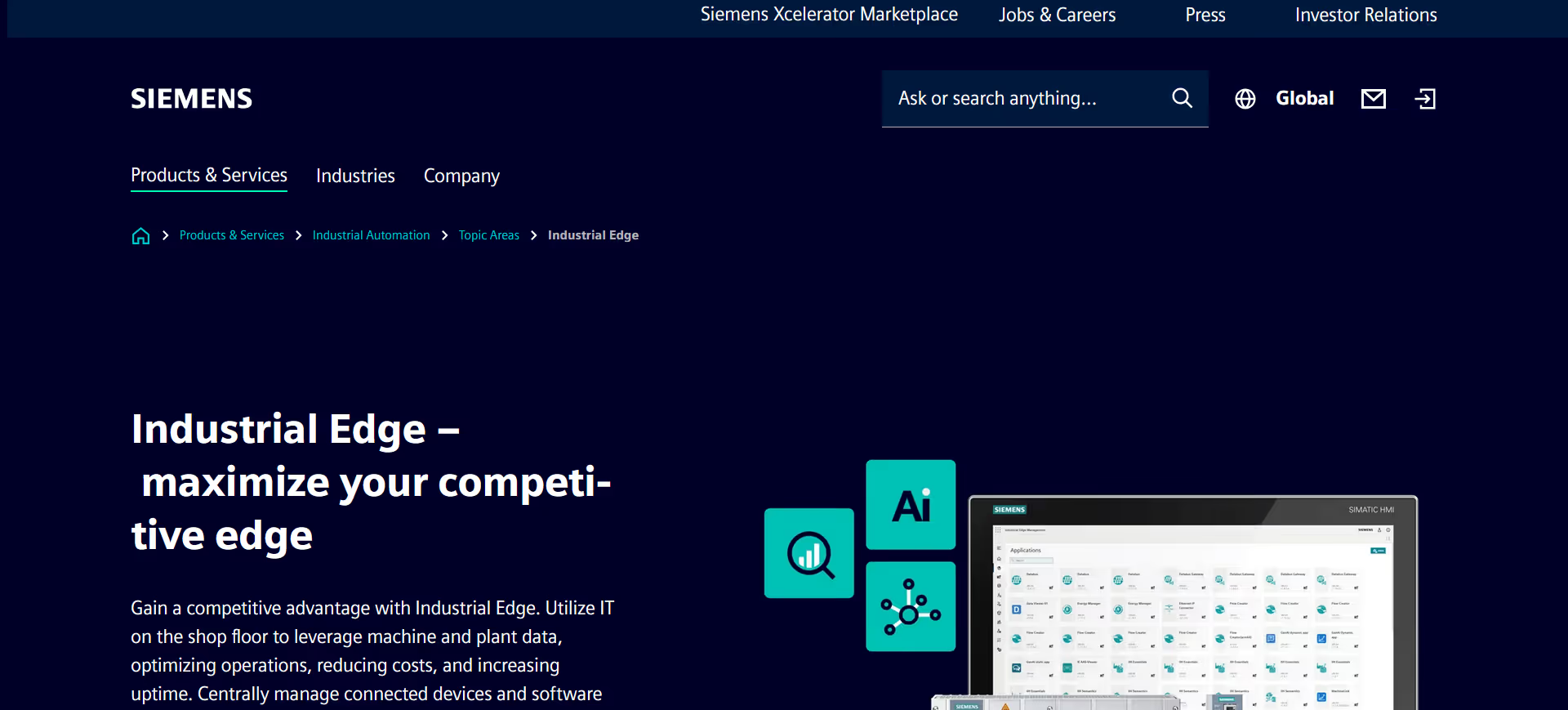
Siemens is one of the global leaders in predictive maintenance thanks to its Industrial Edge and MindSphere platforms, which integrate machine data in real time. The company uses advanced AI algorithms to predict failures and optimize equipment performance in highly complex industrial environments. A key advantage of Siemens is the strong integration of the OT layer with edge analytics, enabling decision-making without cloud latency. Siemens solutions are widely adopted in manufacturing, energy, and transportation due to their scalability and high reliability.
Pros:

IBM is a leading provider of predictive maintenance solutions thanks to the Maximo Application Suite, which integrates asset management with IoT data and AI-driven analytics. The platform enables the creation of advanced failure-prediction models, supporting maintenance planning and reducing unplanned downtime. IBM stands out for its strong focus on data security and compliance with the requirements of large organizations operating complex infrastructures. An additional advantage is its support for digital twins.
Pros:
Cons:

PTC offers some of the most advanced predictive maintenance solutions through its ThingWorx platform, which integrates data from IoT devices with analytical models and process visualizations. The system enables rapid development of industrial applications and the creation of digital twins, supporting precise machine condition monitoring and failure prediction. Thanks to its ability to integrate with a wide range of OEM equipment and production systems, PTC is highly valued in industries with a high level of automation, such as manufacturing, automotive, and machinery.
Pros:
Cons:

Augury provides predictive maintenance systems based on multisensor technology, using vibration, acoustic, temperature, and other measurements to assess the condition of bearings, motors, or power transmission components. The company develops proprietary AI models trained on millions of machine operating hours, achieving high accuracy in detecting failures such as imbalance, misalignment, bearing defects, and mechanical looseness. The Augury platform integrates with CMMS systems, enabling automatic creation of maintenance work orders while significantly reducing the average response time of maintenance teams.
Pros:
Cons:

Samsara offers predictive maintenance solutions based on IoT sensors and real-time data analytics, enabling continuous monitoring of vehicle health, machinery performance, and fleet infrastructure. The platform leverages telematics, diagnostic data, and AI-driven alerts to detect early signs of component failures and optimize maintenance schedules. Through integration with fleet management systems, Samsara enables usage-based maintenance planning, significantly reducing operational costs for transportation and logistics companies.
Pros:
Cons:

Hitachi Vantara is developing the Lumada Maintenance Insights platform, which uses advanced AI algorithms, physics-based models, and edge analytics. These capabilities allow the system to assess the technical condition of high-criticality assets, such as turbines, transformers, and transportation systems. The solution integrates data from IoT, SCADA, PLC, EAM systems, and process analytics, creating a unified asset model that enables anomaly detection, failure prediction, and precise RUL (Remaining Useful Life) calculations. Lumada is particularly effective in the energy, industrial, and infrastructure sectors.
Pros:
Cons:
GE Digital offers predictive maintenance solutions within the Predix and APM (Asset Performance Management) platforms. GE Digital leverages extensive libraries of failure mode models developed from decades of operational data from turbines, generators, and process installations. This enables the detection of component degradation before it becomes measurable using standard methods. The APM platform incorporates asset strategy optimization (ASO), which automatically selects the optimal maintenance strategy based on failure risk cost, asset criticality, and load scenarios. The system also integrates data from non-destructive testing (NDT), such as thermography and ultrasound. It combines this information with process data to build a complete, real-time asset health profile.
Pros:
Cons:

Schneider Electric, founded in 1836 as a manufacturer of steel equipment, has evolved over the decades into a global leader in industrial automation and energy management. As part of this transformation, the company developed the EcoStruxure Asset Advisor platform, which uses advanced analytics and risk-assessment models to monitor critical electrical systems in real time. The solution analyzes lo
A technology leader specializing in advanced hardware, embedded systems, and AI solutions.
He bridges deep engineering expertise with strategic thinking, helping transform complex system architectures into practical technologies used across industries such as aerospace, defense, telecommunications, and industrial IoT.
With a strong engineering background and ongoing PhD research, he combines academic insight with real-world project experience. Jacek also shares his knowledge through technical and business publications, focusing on system design, digital transformation, and the evolving integration of hardware and AI.
This initial conversation is focused on understanding your product, technical challenges, and constraints.
No sales pitch - just a practical discussion with experienced engineers.
Share a few details about your product and context. We’ll review the information and suggest the most appropriate next step.