





Embedded Firmware & Software Development
We provide embedded firmware development services and embedded software development services for industrial systems where deterministic behaviour, hardware integration and long-term reliability are critical.


Engineering Impact in Embedded Systems
We deliver embedded systems development that improves system stability, resource efficiency and long-term maintainability in industrial environments.
Embedded Systems Delivered for Production Environments
We deliver embedded systems engineering aligned with hardware constraints, certification requirements and long-term system operation in industrial environments.
System definition and technical validation
- Precise definition of system behavior, interfaces and constraints
- Validation of embedded hardware–software integration at early stages
- Verification of communication between system components under real conditions
Engineering quality and production readiness
- Firmware and system design aligned with regulatory and industry requirements
- System-level testing focused on reliability, determinism and fault handling
- Readiness for manufacturing, deployment and long-term maintenance
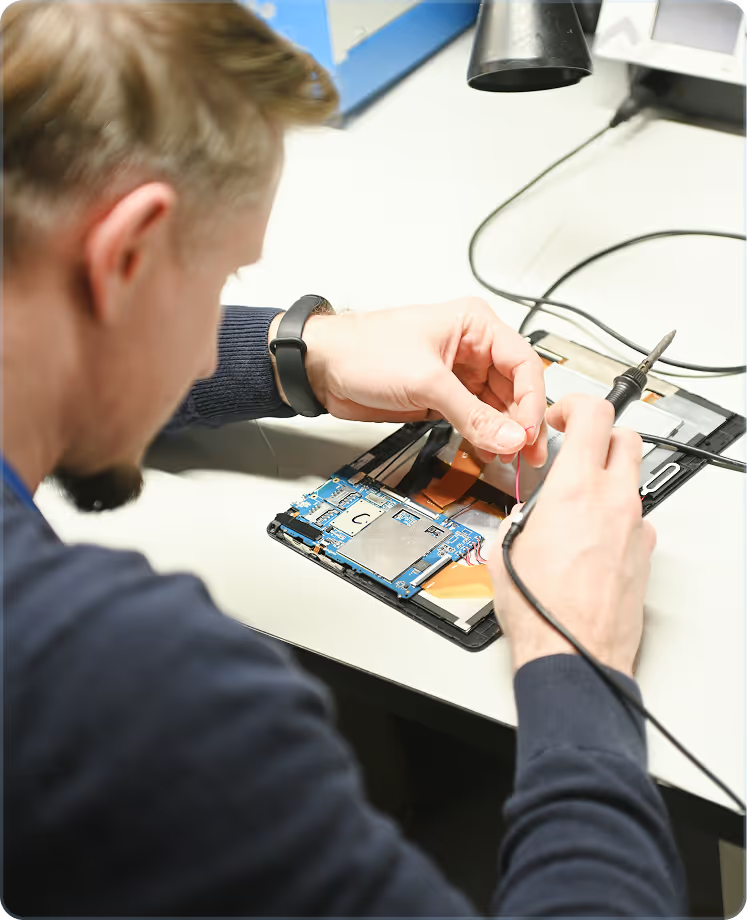
Embedded Systems Built for Real Operational Conditions
We engineer embedded software services with focus on runtime behaviour, timing control and reliable interaction between firmware and hardware components.

Embedded software developed with direct understanding of hardware behavior, timing constraints and low-level system interactions allows predictable execution and stable system operation.
Structured approach to firmware development services, including stabilization, refactoring and controlled evolution of production systems supports long-term maintainability and safe system updates.

Firmware designed for seamless embedded system integration with industrial infrastructure, communication protocols and external control systems maintains compatibility with existing environments and workflows.
Use Cases

We design and develop embedded systems for UAV platforms, integrating sensors, communication modules, and control logic for real-time operation. Our solutions are engineered for mission-critical environments, ensuring reliable performance, low latency, and seamless system integration. Each design supports stable operation under dynamic conditions while maintaining data integrity and operational efficiency.

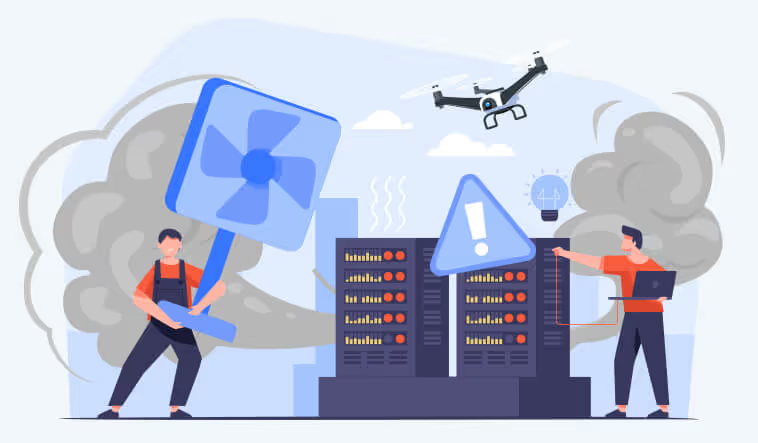

We design and develop firmware for industrial equipment, enabling reliable communication, data acquisition, and system control under real operating conditions. We focus on robustness, real-time performance, and seamless integration with hardware and higher-level systems. Each implementation provides stability, scalability, and long-term maintainability in demanding industrial environments. We als optimize for resource efficiency and compliance with industry protocols.


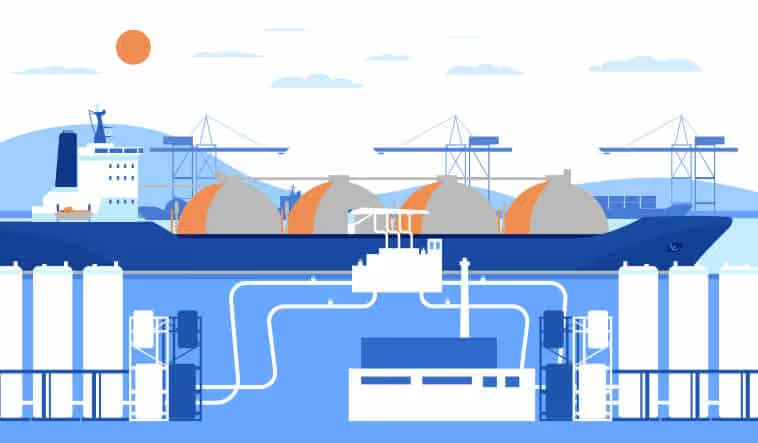
We design and develop firmware for subsea systems focusing on predictable real-time operation, fault tolerance, and robust communication in harsh underwater environments. Each implementation allows consistent performance under pressure, limited accessibility, and long-term deployment conditions. We also support integration with monitoring and diagnostic systems to enable remote operation and maintenance.

We design and implement advanced embedded software for imaging systems, including real-time processing, camera control, and data integration. Our solutions are optimized for high performance, low latency, and seamless interaction with hardware components. Each implementation ensures stable operation, high data throughput, and reliable system behavior. We also support integration with higher-level systems and data pipelines for end-to-end functionality.
Industries We Serve
Our engineering capabilities are deployed across regulated, mission-critical and industrial sectors.

Subsea electronics, downhole systems and harsh-environment hardware for offshore and onshore operations.

Mission-critical embedded systems and real-time firmware for UAV platforms and defence electronics.

Real-time embedded firmware for gas detection, environmental sensing and worker alert systems.

Embedded systems and real-time firmware for industrial automation,
machine control and IoT data acquisition.
FAQs
If you have additional questions or would like to discuss your requirements, feel free to get in touch with our team.
Embedded firmware development services cover low-level software written in C/C++ that directly controls hardware components, communication interfaces and real-time system behaviour. This includes device drivers, communication stacks, bootloaders and hardware abstraction layers. In industrial environments, firmware must also handle fault conditions, timing constraints and long-term stability.
Embedded software development operates under strict constraints such as limited memory, CPU resources and real-time requirements. It requires direct interaction with hardware, precise timing control and deterministic execution. Unlike typical software, failures often impact physical systems, not just digital processes.
Firmware stabilisation is necessary when systems show unpredictable behaviour, crashes or communication issues under load. Refactoring is recommended when legacy code becomes difficult to maintain, extend or migrate to new hardware. In many cases, stabilisation avoids the need for a full system rewrite.
Common challenges include hardware–software synchronisation, real-time performance, limited resources and integration with industrial protocols. Additional complexity comes from certification requirements, lack of documentation in legacy systems and long lifecycle expectations. These factors require a structured engineering approach.
Firmware porting involves adapting existing embedded software to a new microcontroller, processor or hardware architecture. This includes updating drivers, memory management, peripheral handling and timing mechanisms. Proper porting ensures system behaviour remains consistent despite hardware changes.
An effective embedded development company understands hardware constraints, industrial communication standards and long-term system operation. It should be able to design architecture, stabilise legacy firmware and ensure reliable integration with existing infrastructure. Experience in regulated or high-risk environments is often critical.
Discuss your product with our expert
This initial conversation is focused on understanding your product, technical challenges, and constraints.
No sales pitch - just a practical discussion with experienced engineers.



Share a few details about your product and context. We’ll review the information and suggest the most appropriate next step.