


No items found.

Why IoT Data Analytics is Essential: Use Cases for Your Business Strategy Description

Adam Szychulec
Electronics Design Engineer
16 min. read •
Published on Feb 08, 2024

We stepped into a new IoT era, where the sheer volume of data generated by connected devices is staggering. To derive meaningful insights and unlock the full potential of IoT deployments, organizations turn to IoT Data Analytics. In this article, we explore the fundamentals of IoT Data Analytics, delve into the various types of IoT analytics, and highlight the compelling benefits that drive its essential role in shaping business strategies. INTechHouse can help businesses with all IoT challenges because we know how to work smart and effective. Running!
What is IoT Data Analytics?

IoT Data Analytics
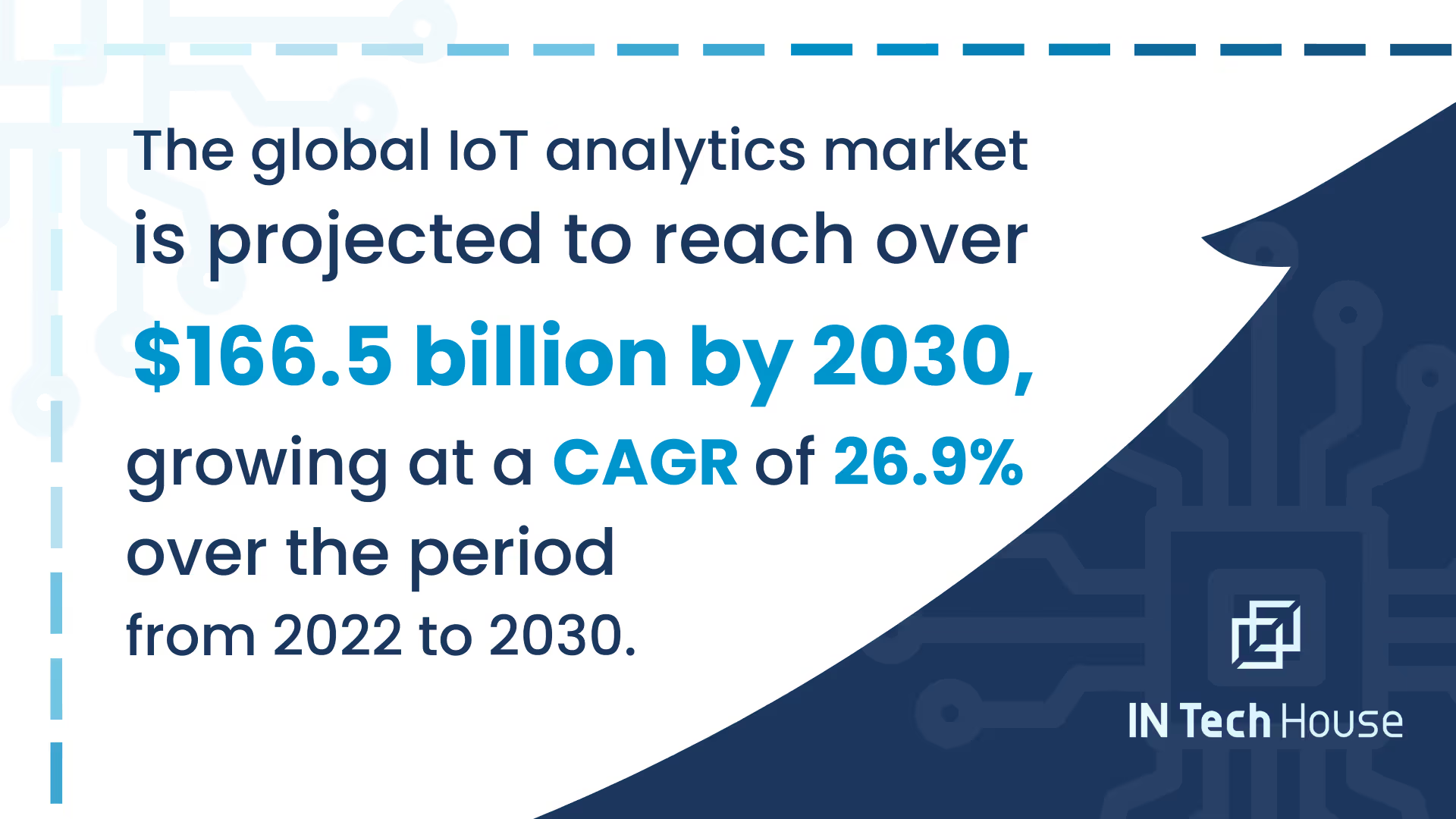
involves the examination and interpretation of the vast amounts of data generated by IoT devices. It encompasses the use of advanced analytical techniques to extract valuable insights, patterns, and trends from this data. By leveraging analytics, organizations can transform raw data into actionable intelligence, enabling informed decision-making and strategic planning. What about the market?
global IoT analytics
Source: Globenewswire

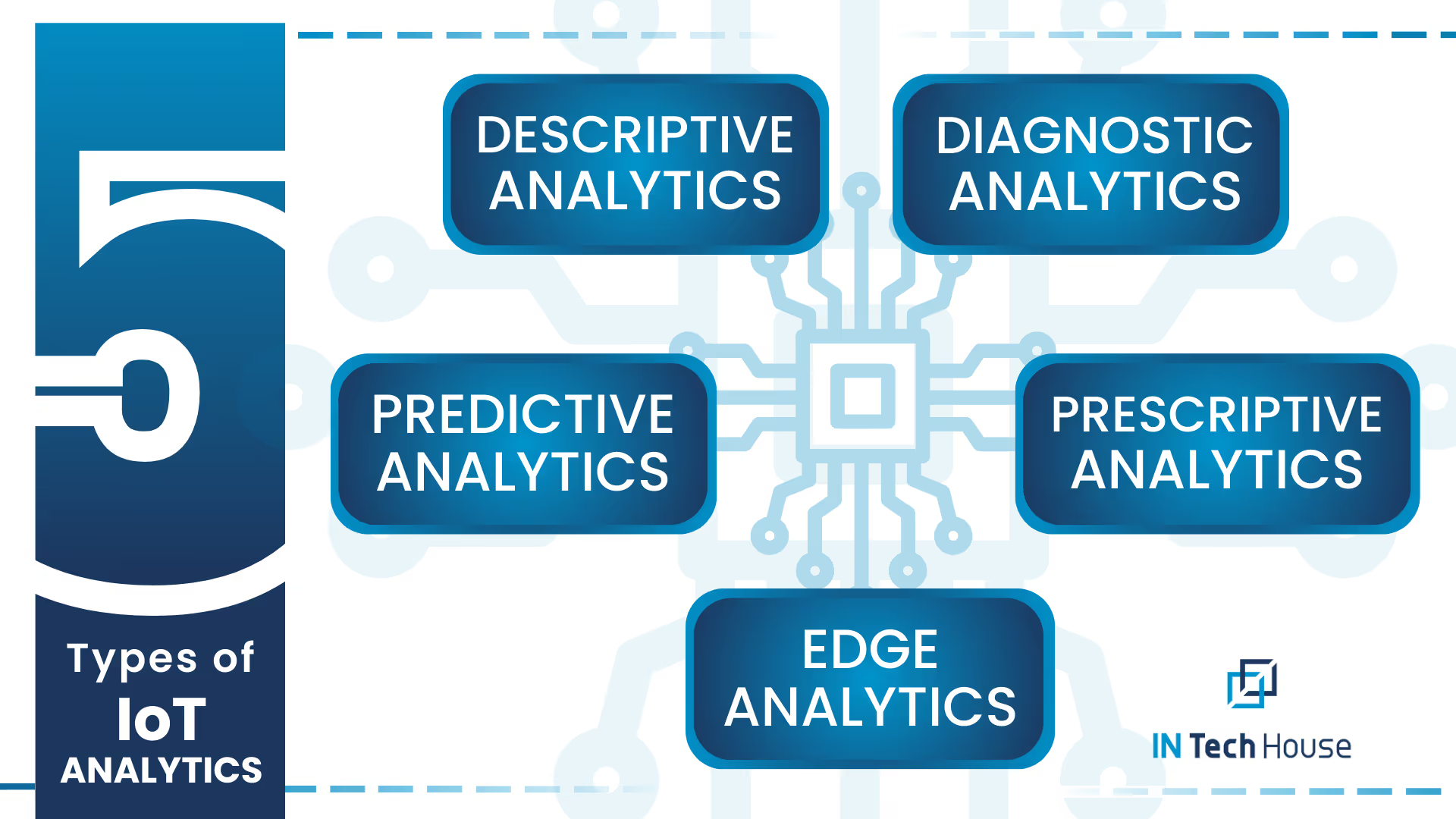
What Are the Types of IoT Analytics?

What Are the Types of IoT Analytics?
 

1. Descriptive Analytics:

  • Purpose: Summarizes historical data to provide insights into what has happened.
  • Use Case: Analyzing past performance metrics of IoT devices for optimization.

2. Diagnostic Analytics:

  • Purpose: Investigates the reasons behind past events or performance.
  • Use Case: Identifying the root causes of anomalies or failures in IoT systems.

3. Predictive Analytics:

  • Purpose: Utilizes historical data to forecast future events or trends.
  • Use Case: Predicting equipment failures in IoT devices to enable proactive maintenance.

4. Prescriptive Analytics:

  • Purpose: Recommends actions to optimize future outcomes.
  • Use Case: Providing recommendations for improving the efficiency of IoT processes.

5. Edge Analytics:

  • Purpose: Performs analytics directly on IoT devices rather than in a centralized cloud.
  • Use Case: Real-time processing of data on edge devices for faster decision-making.

IoT analytics Use Cases and Applications

1. Predictive Maintenance:

  • Overview: Anticipating equipment failures to enable proactive maintenance.
  • Application: Predicting when machinery requires maintenance to minimize downtime.

2. Smart Cities:

  • Overview: Leveraging data analytics to enhance city infrastructure and services.
  • Application: Optimizing traffic flow, waste management, and energy consumption.

3. Healthcare Monitoring:

  • Overview: Continuous monitoring of patient health through connected devices.
  • Application: Analyzing health data to detect anomalies and provide timely interventions.

4. Supply Chain Optimization:

  • Overview: Using analytics to optimize inventory, logistics, and distribution.
  • Application: Predicting demand patterns to streamline supply chain operations.

5. Energy Management:

  • Overview: Monitoring and optimizing energy consumption in buildings and industries.
  • Application: Identifying energy inefficiencies and recommending improvements.

6. Retail Analytics:

  • Overview: Analyzing customer behavior and preferences to enhance the retail experience.
  • Application: Offering personalized recommendations and optimizing product placements.

7. Agriculture Precision:

  • Overview: Using analytics to optimize agricultural practices.
  • Application: Analyzing weather and soil data for precise irrigation and fertilization.

How Does IoT Analytics Work?

The main IoT analytics goal is to extract valuable insights, patterns, and trends from this data, enabling informed decision-making and strategic planning. Here’s a step-by-step overview of how IoT analytics works: 1. Data Collection:

  • Overview: IoT devices generate a continuous stream of data, including sensor readings, device status, and user interactions.
  • Process:
  • Sensors on IoT devices capture data in real-time.
  • Data is transmitted to a centralized cloud platform or processed locally on edge devices.

2. Data Ingestion:

  • Overview: Raw data is ingested into a storage system for further processing and analysis.
  • Process:
  • Raw data is received and stored in a centralized database or data warehouse.
  • In edge analytics, some processing may occur directly on the device before transmitting data to the cloud.

3. Data Processing:

  • Overview: Raw data undergoes preprocessing to clean, filter, and prepare it for analysis.
  • Process:

FAQ

How many different types of data are there?There are various types of data, including structured, semi-structured, and unstructured data. Structured data is organized and follows a clear format, while semi-structured and unstructured data lack a predefined structure and may include text, images, and multimedia. What are the most popular data analysis methods?Popular data analysis methods include descriptive analytics for summarizing data, diagnostic analytics to understand reasons behind trends, predictive analytics for forecasting future outcomes, and prescriptive analytics for providing actionable insights. Do I need analytics if my business has a massive amount of data?Yes, analytics is crucial for extracting meaningful insights from large datasets. It helps uncover patterns, trends, and correlations that enable informed decision-making, optimization, and strategic planning. What are the most popular analytics tools on the market?Several analytics tools dominate the market, including industry leaders such as Tableau, Power BI, Google Analytics, and Apache Spark. The choice of tool depends on specific business needs, data complexity, and desired functionalities.

Adam Szychulec

Electronics Design Engineer

A technology leader specializing in hardware and embedded systems.

He has extensive experience delivering complex engineering projects for industries such as energy, military & defence, and aerospace.

His work centers on developing reliable, high-performance hardware systems designed for demanding environments and long-term industrial deployment. Adam combines deep technical expertise with practical engineering leadership, helping transform advanced embedded technologies into robust, mission-critical solutions used by global clients.

More articles by this author
Related posts
No items found.

Discuss your product with our R&D team

This initial conversation is focused on understanding your product, technical challenges, and constraints.

No sales pitch - just a practical discussion with experienced engineers.

By sending the form, you consent to receive email communications from InTechHouse.
Message sent successfully!
Your message has been successfully sent to our R&D team. We will respond within 1-2 business days.
Unable to send message
Need a quick clarification?
Request an initial project assessment

Share a few details about your product and context. We’ll review the information and suggest the most appropriate next step.

No items found.