Understanding the nuanced differences and similarities between software and hardware development is essential. While software development focuses on agility and rapid iteration, hardware development emphasizes precision, thorough testing, and robust production processes. Both disciplines demand a deep commitment to quality, innovation, and customer satisfaction. Let's examine how businesses benefit from this mutual symbiosis.
The difference between hardware and software is fundamental in computer engineering and information systems. Hardware refers to the physical components of a computer and peripheral devices, such as processors, RAM, hard drives, enclosure, and input/output devices like sensors. These components are responsible for performing physical operations and providing the platform for software operation. Software, on the other hand, is a set of instructions and data that manage and coordinate the operation of hardware, encompassing operating systems, applications, and drivers. As Bill Gates said, "Software is a great combination between artistry and engineering". Furthermore, the development of hardware and software often goes hand in hand, as new hardware technologies require software updates, and advanced software features may require new or more powerful custom hardware. As the founder of Microsoft said, "You can't have great software without great hardware. If the software is the soul, the hardware is the body".
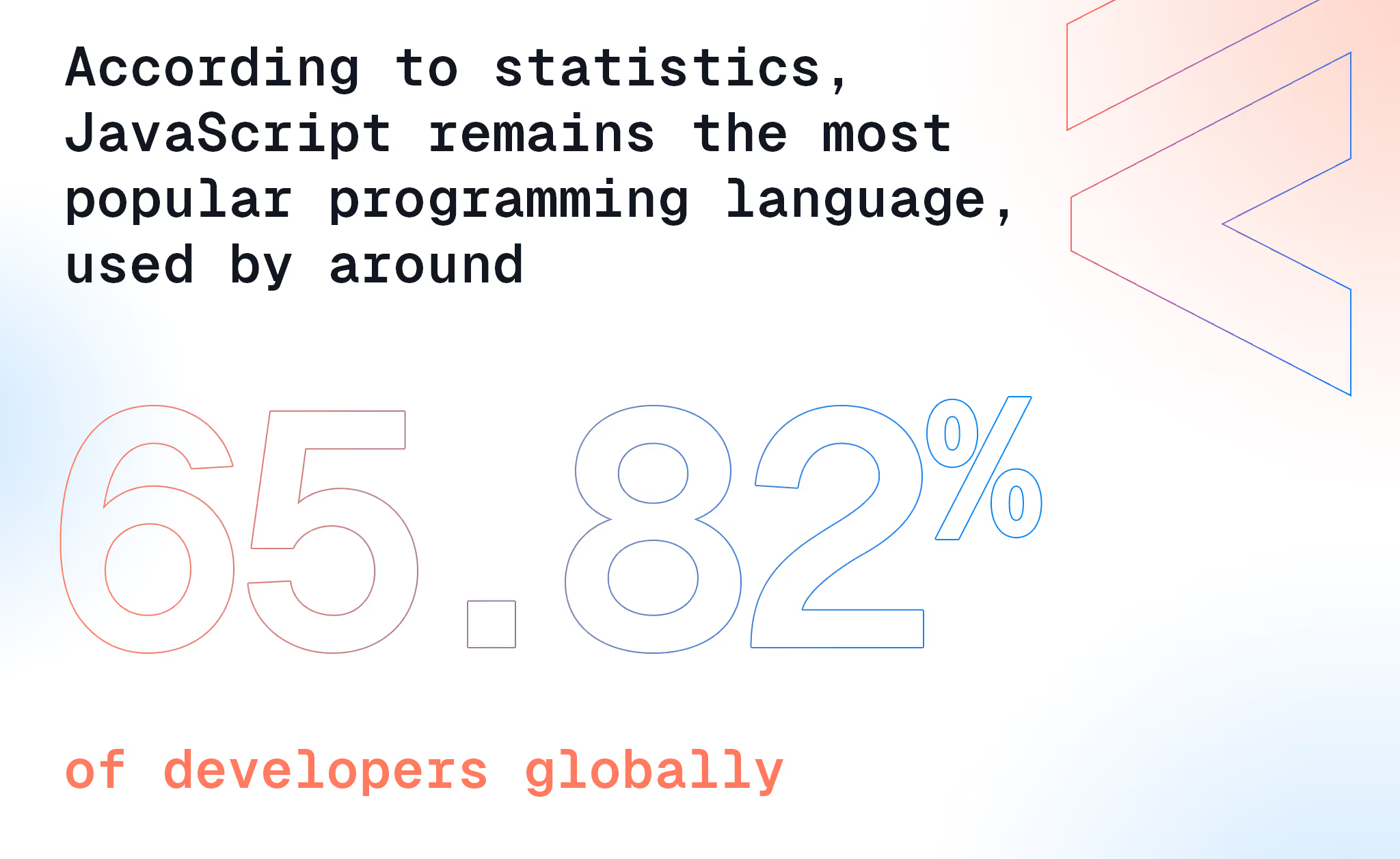
The software development process consists of several key stages, starting with requirements analysis, followed by design, implementation, testing, deployment, and maintenance. Initially, requirements analysis involves gathering detailed information from stakeholders, often using techniques such as user stories, use cases, and requirements workshops. Next, architecture and detailed designs are created using UML diagrams and design patterns.However, implementation involves writing code in programming languages such as Java, Python, or C++, using frameworks like Spring or Django, and IDEs like IntelliJ IDEA or Visual Studio Code. According to statistics, JavaScript remains the most popular programming language, used by around 65.82% of developers globally. A crucial element of this process is testing, which includes various types of tests: unit tests (JUnit, pytest), integration tests, system tests, and acceptance tests (Selenium, JMeter). Then, deployment automation is achieved using CI/CD tools such as Jenkins, GitLab CI, Docker, and Kubernetes. After that, software is continuously maintained, which involves fixing bugs, adding new features, and improving performance through regular updates.
So what about hardware development? As claims Alan Kay - the winner of the A.M. Turing Award, "The best way to predict the future is to invent it". Above all, hardware development involves many activities such as requirements analysis, conceptual design, detailed design, prototyping, testing and validation, production, and maintenance and support. At the beginning of the process, requirements analysis involves gathering detailed specifications based on client needs, documented in design briefs and functional specifications. Meanwhile, conceptual design involves creating initial concepts using CAD software such as SolidWorks or AutoCAD.The next stage is design, where detailed schematics and PCB layouts are created using tools like Altium Designer or Eagle. Prototyping involves building and testing prototypes to validate designs using rapid prototyping techniques and 3D printing. The testing and validation stage cannot be overlooked either. They include extensive environmental, stress, and compliance tests to ensure reliability and adherence to standards. Once testing is complete, the hardware is produced on a mass scale, requiring supply chain management and logistics. In the maintenance and support phase, hardware is supported through updates, repairs, and upgrades. AspectSoftware Development Hardware Development FocusAgility, rapid iterationPrecision, thorough testing, robust production processesComponentsOperating systems, applications, driversProcessors, RAM, hard drives, I/O devicesProcessesAnalysis, design, implementation, testing, deployment, maintenanceAnalysis, conceptual design, detailed design, prototyping, testing and validation, production, maintenance and supportDesign ToolsUML diagrams, design patternsCAD software (SolidWorks, AutoCAD), PCB layout tools (Altium Designer, Eagle)Implementation ToolsProgramming languages (Java, Python, C++), frameworks (Spring, Django), IDEs (IntelliJ IDEA, Visual Studio Code)Rapid prototyping, 3D printingTesting ToolsUnit tests (JUnit, pytest), integration tests, system tests, acceptance tests (Selenium, JMeter)Environmental tests, stress tests, compliance testsDeploymentCI/CD tools (Jenkins, GitLab CI, Docker, Kubernetes)Mass production, supply chain management, logisticsMaintenanceFixing bugs, adding new features, performance improvementsUpdates, repairs, upgrades
Tab. 1 Comparison software development vs. hardware development
Optimization of Operational Processes: Implementing advanced technological solutions allow for the automation of many operational processes. This increases work efficiency by reducing the time required for repetitive tasks and minimizing the risk of human errors. For example, implementing ERP systems integrated with current structures will enable better resource management.
Product Innovation: SHDS empowers the development of new, innovative products that can become a key part of business offering. Integrating the latest technologies into product support to meet the changing needs of the market and increase competitiveness.
Scalability and Technological Flexibility: Investments in software and hardware development make it possible to scale operations as the company grows. Flexible technological solutions facilitate easy adaptation of the infrastructure to increasing demand without significant additional costs. An example is the use of cloud computing, which offers scalable IT resources according to current needs. Also, FPGA, or Field-Programmable Gate Array, is a type of programmable logic device that can be configured after manufacturing. An FPGA consists of a matrix of logic blocks that can be interconnected in various ways through programmable connections. This allows the device to be tailored to specific tasks and functions.
Data Management and Analysis: Advanced analytical tools developed within SHDS can provide valuable insights into company operations, customer preferences, and market trends. This enables more informed strategic decisions. For example, Big Data analysis can support marketing, logistics, and sales activities.
Reduction of Operational Costs: Automation and optimization of processes using modern technological solutions lead to a reduction in operational costs. Lower maintenance costs of IT infrastructure, minimized human error costs, and optimized resource management directly translate into improved company financial performance.
We encourage you to explore the project details:
How long does a typical hardware and software development project take?The duration of a project depends on its complexity and scope. Simple projects can take a few months, while more complex solutions may require a year or more of work.
How can approach project management for combined hardware and software development?It can be used a collaborative approach to project management that integrates Agile and Scrum methodologies. This allows for flexibility, regular updates, and close communication between hardware and software teams. Utilization of project management tools like Jira and Trello also tracks progress and ensures timely delivery.How can it be handled in cross-platform software development?For cross-platform software development, it can be use frameworks like React Native, Xamarin, and Flutter. These tools allow you to write code once and deploy it across multiple platforms, including iOS, Android, and web applications, ensuring consistent performance and user experience.
A technology leader specializing in advanced hardware, embedded systems, and AI solutions.
He bridges deep engineering expertise with strategic thinking, helping transform complex system architectures into practical technologies used across industries such as aerospace, defense, telecommunications, and industrial IoT.
With a strong engineering background and ongoing PhD research, he combines academic insight with real-world project experience. Jacek also shares his knowledge through technical and business publications, focusing on system design, digital transformation, and the evolving integration of hardware and AI.
This initial conversation is focused on understanding your product, technical challenges, and constraints.
No sales pitch - just a practical discussion with experienced engineers.
Share a few details about your product and context. We’ll review the information and suggest the most appropriate next step.