Advanced technology is the backbone of modern medicine. Embedded systems empower doctors to diagnose diseases with precision, perform intricate surgeries, and monitor patients in real-time. Today’s medical devices not only collect vast amounts of data but also analyze it to enhance the quality of the healthcare system. From smart glucose meters and surgical robots to advanced wearable devices, embedded systems have become the silent heroes of the medical revolution. This article explores how these technologies are revolutionizing medicine and shaping future trends.
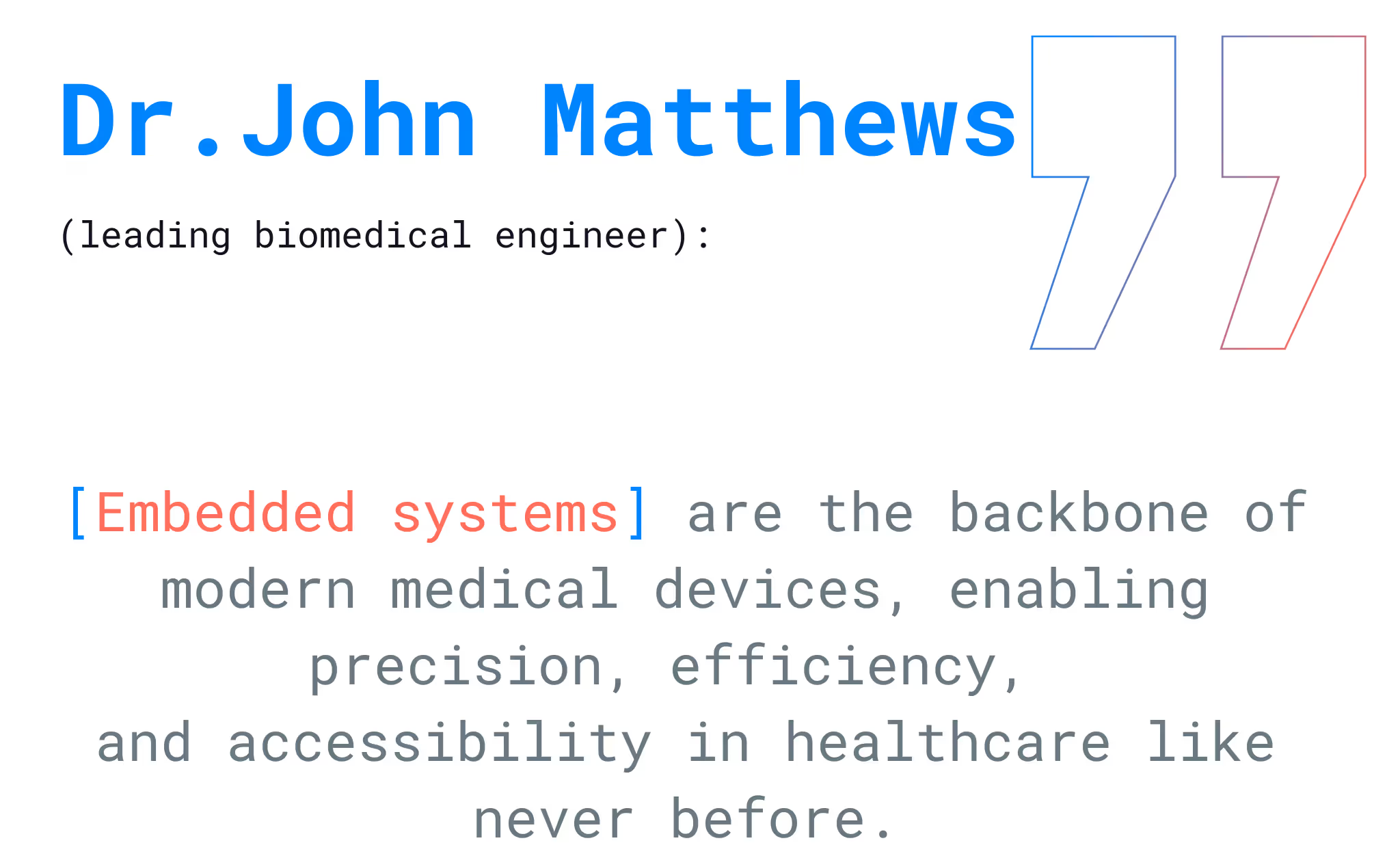
Advanced artificial intelligence algorithms, such as neural networks, biomedical signal classification algorithms, and time-series analysis, enable the interpretation of physiological signals, including heart activity, blood oxygen levels, and blood pressure, allowing for early anomaly detection. Dr. Emily Carter, a specialist in medical technology, explains, "Real-time monitoring through embedded systems allows for proactive rather than reactive healthcare, significantly improving patient outcomes".
Integration with IoT technologies and cloud computing ensures that patient data can be analyzed remotely, enhancing healthcare accessibility and enabling rapid medical interventions. These systems often utilize low-power microcontrollers and advanced biosignal sensors, contributing to their efficiency and suitability for portable devices. With ongoing miniaturization and the implementation of advanced processing units, the future of patient monitoring is moving towards greater automation and personalized healthcare.
Examples of such devices include:
Embedded systems form the foundation of modern medical diagnostics, enabling precise and rapid processing of patient data. In computed tomography (CT) and magnetic resonance imaging (MRI), advanced image processing algorithms, such as neural network-based segmentation and anomaly pattern analysis, allow for highly detailed and reliable examination results. By reducing manual image analysis, this technology enhances diagnostic precision and minimizes human error. "The integration of embedded systems in diagnostics has drastically reduced human error and enhanced the precision of imaging technologies" notes Dr. Sarah Williams, a radiologist at Global Medical Research.
In ultrasonography, embedded systems manage the emission and reception of ultrasound waves, automatically optimizing real-time imaging. Endoscopes, equipped with miniature cameras and image processing units, enable visualization of the patient's internal organs. When integrated with machine learning algorithms, these systems can detect early signs of pathology, significantly improving early disease detection and patient outcomes.
The integration of intelligent control algorithms and real-time data analysis in therapeutic devices is transforming the landscape of modern medicine. In infusion pumps, the use of microprocessors enables precise drug delivery control and real-time analysis of the body's response to treatment. Pacemakers and defibrillators leverage arrhythmia detection algorithms and adaptive stimulation mechanisms, adjusting electrical impulses to match the patient's individual physiological parameters.
Physiotherapy devices, including muscle stimulators, utilize complex biomechanical models to precisely regulate electrical impulses, aiding in the rehabilitation process. Thanks to advanced integrated circuits and biological sensors, modern therapeutic devices can dynamically adapt to changing patient needs, enhancing treatment effectiveness and improving overall patient comfort.
Robotic-assisted surgery is among the fastest-growing fields in healthcare technology. With over 1.5 million procedures performed annually, these systems are revolutionizing surgical precision and patient outcomes. These systems integrate advanced control mechanisms, modern sensory technology, and precise engineering to enhance the effectiveness and safety of surgical interventions.
Modern embedded systems drive the advancement of medical robotics in several key areas:
Surgical robotics and supporting systems are transforming the paradigm of medical interventions, making procedures less invasive and more efficient, ultimately leading to better clinical outcomes and faster patient recovery.
Advanced embedded systems significantly enhance the quality of patient care by offering both real-time monitoring and adaptive therapeutic support mechanisms. Modern hospital beds equipped with body position, respiration, and heart rate sensors enable continuous analysis of patient parameters, allowing for the early detection of health risks and immediate response from medical staff. Additionally, these data can be processed by predictive algorithms that identify patterns indicative of potential health complications, facilitating a proactive approach to treatment.
Intelligent alarm systems, based on motion analysis algorithms and fall detection sensors, enhance the safety of elderly individuals and patients with limited mobility. These systems utilize sensor data to analyze movement patterns, identifying concerning changes such as gait instability, which may indicate an increased risk of falls in the future.
Moreover, therapy support systems adapt interventions to the patient’s real-time needs, accelerating rehabilitation and improving its effectiveness. Machine learning algorithms process biomedical data, detecting subtle anomalies and assisting physicians in clinical decision-making. By integrating various sensor technologies and data analysis methods, these systems not only enhance patient safety but also optimize medical resource management, enabling more efficient utilization of healthcare personnel and infrastructure.
If you want to learn how to create high-quality embedded systems, be sure to read the article:
https://intechhouse.com/blog/quality-attributes-in-embedded-systems-how-to-build-reliable-and-resilient-devices/
Are embedded systems safe for patients?
Yes, these systems undergo rigorous testing and comply with safety standards such as ISO 13485 and FDA 510(k) to ensure their reliability and effectiveness.
What technologies are used in embedded systems for medicine?
Embedded medical systems utilize low-power microprocessors, biosignal sensors, wireless communication (e.g., Bluetooth Low Energy), and artificial intelligence technologies.
What are the key differences between embedded systems in medical devices and other IoT systems?
Medical embedded systems must meet strict safety standards, operate in real-time, and have high fault tolerance, distinguishing them from standard IoT devices used in industries or home automation.
Can embedded systems operate autonomously?
Yes, many embedded systems function autonomously, monitoring patients and responding to health status changes—for example, automated infusion pumps that adjust medication dosages in real time.
This initial conversation is focused on understanding your product, technical challenges, and constraints.
No sales pitch - just a practical discussion with experienced engineers.
Share a few details about your product and context. We’ll review the information and suggest the most appropriate next step.