The volume of data being generated is expanding at an unprecedented rate. Organizations of all sizes and across various industries are realizing the potential of harnessing this vast amount of information to gain valuable insights and drive informed decision-making. Big data analytics has emerged as a revolutionary tool that enables businesses to extract meaningful patterns, trends, and correlations from massive datasets. In this article, we will delve into the world of big data analytics and explore its significance in transforming businesses. Let’s answer some key questions to shed light on this dynamic field.
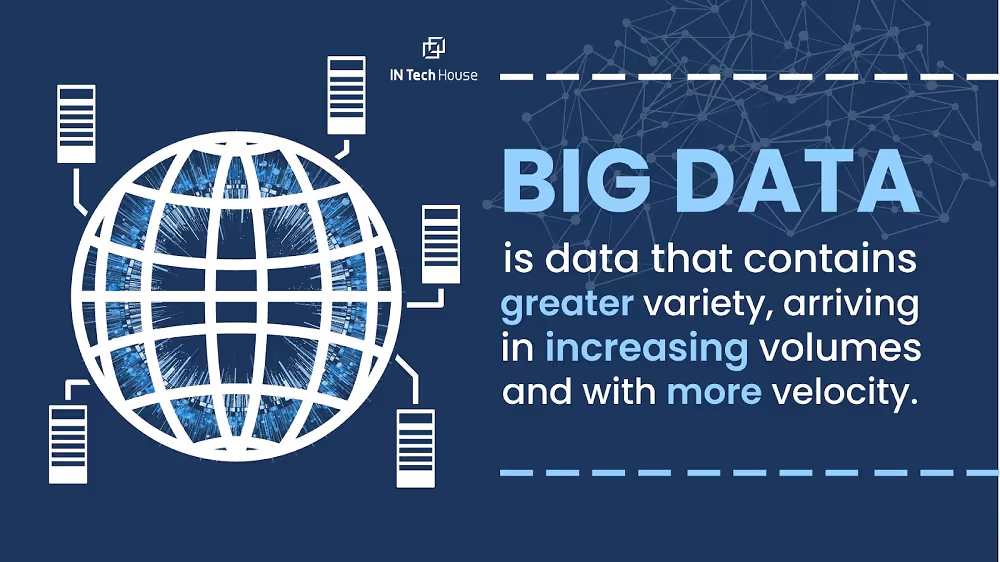
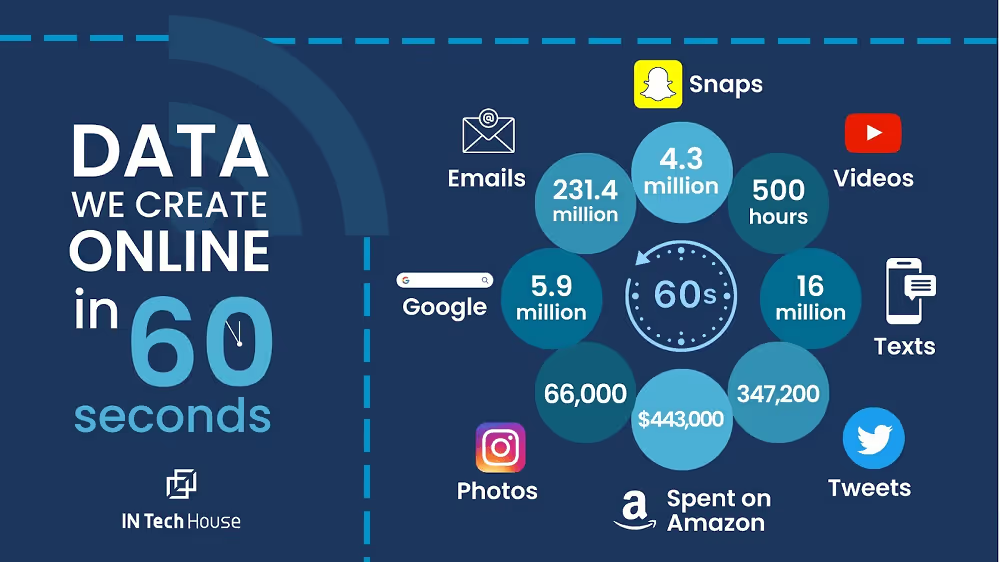

What are some commonly used Big Data Analytics tools?There are several popular Big Data Analytics tools available in the market, including Apache Hadoop, Apache Spark, SAS, R, Python, Tableau, and Microsoft Power BI. These tools provide capabilities for data processing, analysis, visualization, and machine learning.Who uses Big Data Analytics?Big Data Analytics is utilized by various organizations across different industries. It is used by businesses ranging from small startups to large enterprises, as well as government agencies, healthcare institutions, financial institutions, retail companies, and more. Essentially, any organization that deals with large volumes of data can benefit from Big Data Analytics.How do I find out the data I already have and what I need for Big Data Analytics?Conducting a data audit is a useful step in determining the data you already possess and what additional data you may need. Begin by identifying the sources of data within your organization, such as databases, customer relationship management (CRM) systems, social media platforms, and other relevant sources. Assess the quality and relevance of the existing data and identify any gaps that need to be filled to meet your analytics objectives.What are the three types of Big Data?The three types of Big Data are:
Why do we need Big Data Analytics?Big Data Analytics is crucial because it allows organizations to extract valuable insights and make data-driven decisions. It enables the discovery of patterns, trends, correlations, and anomalies within large datasets that may be difficult or impossible to identify through traditional analysis methods. Big Data Analytics helps businesses gain a competitive edge, improve operational efficiency, enhance customer experiences, mitigate risks, and drive innovation.Can I learn Big Data for free?Yes, there are numerous resources available online that offer free educational materials and courses on Big Data Analytics. Websites like Coursera, edX, and Udemy offer both free and paid courses on Big Data Analytics, data science, and related topics. Additionally, there are online tutorials, forums, and open-source tools that provide opportunities for self-learning and exploration of Big Data Analytics concepts and techniques.
A technology leader specializing in advanced hardware, embedded systems, and AI solutions.
He bridges deep engineering expertise with strategic thinking, helping transform complex system architectures into practical technologies used across industries such as aerospace, defense, telecommunications, and industrial IoT.
With a strong engineering background and ongoing PhD research, he combines academic insight with real-world project experience. Jacek also shares his knowledge through technical and business publications, focusing on system design, digital transformation, and the evolving integration of hardware and AI.
This initial conversation is focused on understanding your product, technical challenges, and constraints.
No sales pitch - just a practical discussion with experienced engineers.
Share a few details about your product and context. We’ll review the information and suggest the most appropriate next step.