
Tech

AI in Hardware Design

Adam Szychulec
Electronics Design Engineer
16 min. read •
Published on Nov 09, 2023
Do you know that right now it’s happening a revolution in hardware design with the help of AI?
AI Famous Quotes
Artificial Intelligence (AI) is making its presence felt in virtually every industry. While AI has found extensive applications in software development and data analysis, its transformative potential is equally remarkable in the realm of hardware design. In this article, we will explore how AI is revolutionizing hardware design, reshaping the landscape of electronics, and opening up new horizons for innovation.

What is Hardware Design?

Hardware design refers to the process of creating the physical components and systems that make up electronic devices. It encompasses the design of integrated circuits, microprocessors, printed circuit boards (PCBs), and other electronic components. Traditionally, hardware design has been a labour-intensive and time-consuming process, but AI is changing that paradigm.

AI Hardware Technologies

AI in Hardware Design
Several AI hardware technologies are driving innovation in hardware design:  
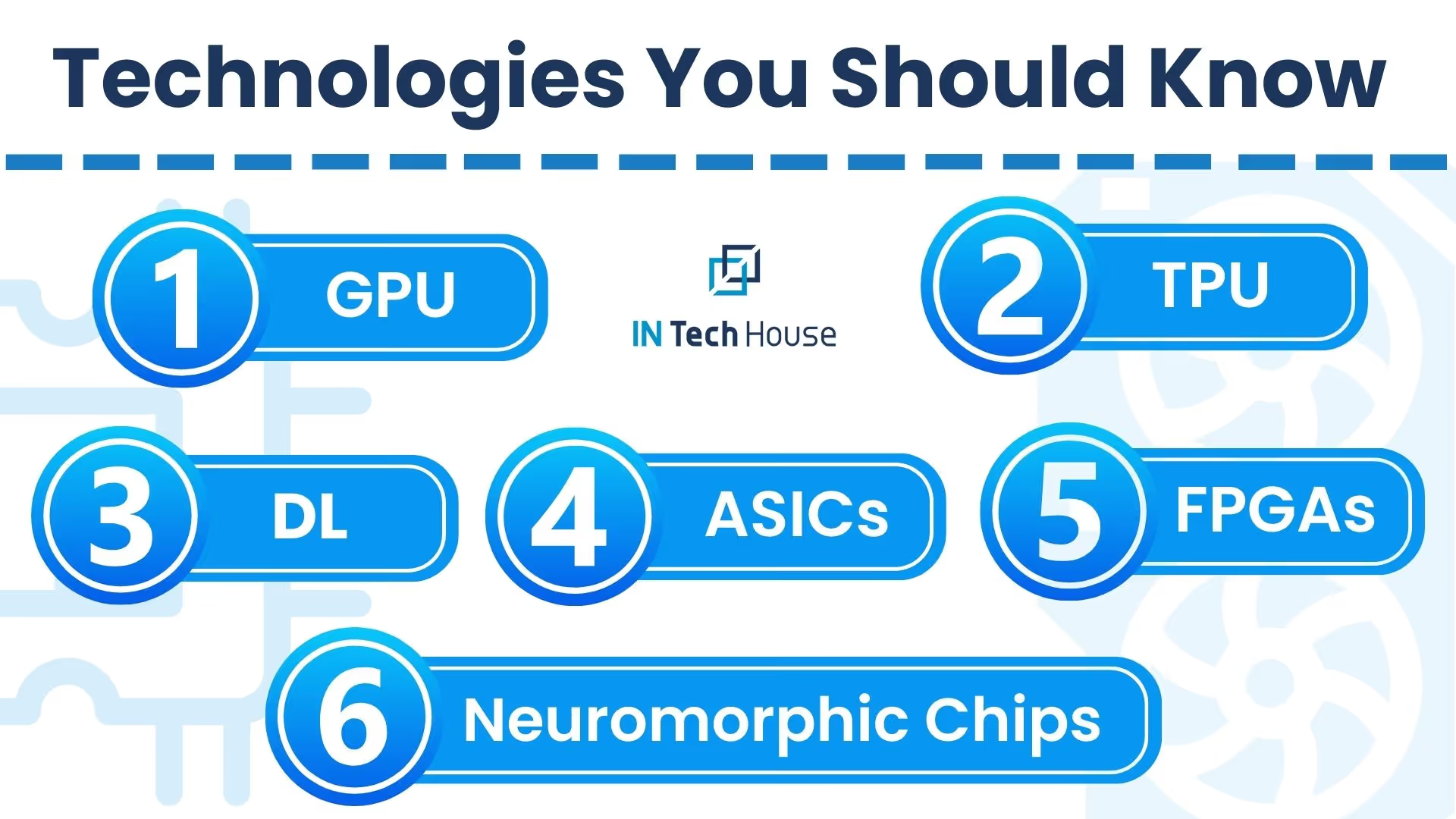
Hardware Technologies You Should Know
 
#1. Graphical Processing Units (GPUs)
GPUs, originally designed for rendering graphics, have proven to be highly effective in accelerating AI workloads. Their parallel processing capabilities make them suitable for tasks like deep learning training and inference. GPUs are now commonly used in AI hardware for tasks such as image and video analysis, natural language processing, and more.
#2. Tensor Processing Units (TPUs)
TPUs, developed by Google, are specialized hardware accelerators designed specifically for machine learning tasks. They excel at speeding up neural network inference and training, making them a valuable asset in AI hardware design. TPUs are known for their high efficiency and performance when handling AI workloads.
#3. Deep Learning (DL)
Deep learning, a subset of machine learning, plays a pivotal role in AI hardware design. Deep neural networks (DNNs) have revolutionized various industries, from healthcare to autonomous vehicles. AI-driven hardware leverages DL techniques to optimize and enhance hardware designs, resulting in more efficient and powerful electronic systems. #4. Application-Specific Integrated Circuits (ASICs) ASICs are custom-designed integrated circuits tailored for specific applications. AI hardware designers are increasingly turning to ASICs to achieve the highest levels of performance and energy efficiency for AI workloads. ASICs are optimized to execute specific algorithms and are often used in applications like cryptocurrency mining and AI accelerators.
#5. Field-Programmable Gate Arrays (FPGAs)
FPGAs are versatile hardware devices that can be reprogrammed to perform various tasks. They are well-suited for prototyping and accelerating AI workloads. AI hardware designers use FPGAs to iterate quickly on designs and test different algorithms before committing to a specific hardware configuration.
#6. Neuromorphic Chips
Neuromorphic chips are inspired by the structure and function of the human brain. They are designed to perform AI tasks efficiently by mimicking the brain’s neural networks. Neuromorphic hardware holds promise for applications like sensory processing, robotics, and cognitive computing.

Using AI for Hardware Design

Say Yes to AI Hardware Design
AI Design
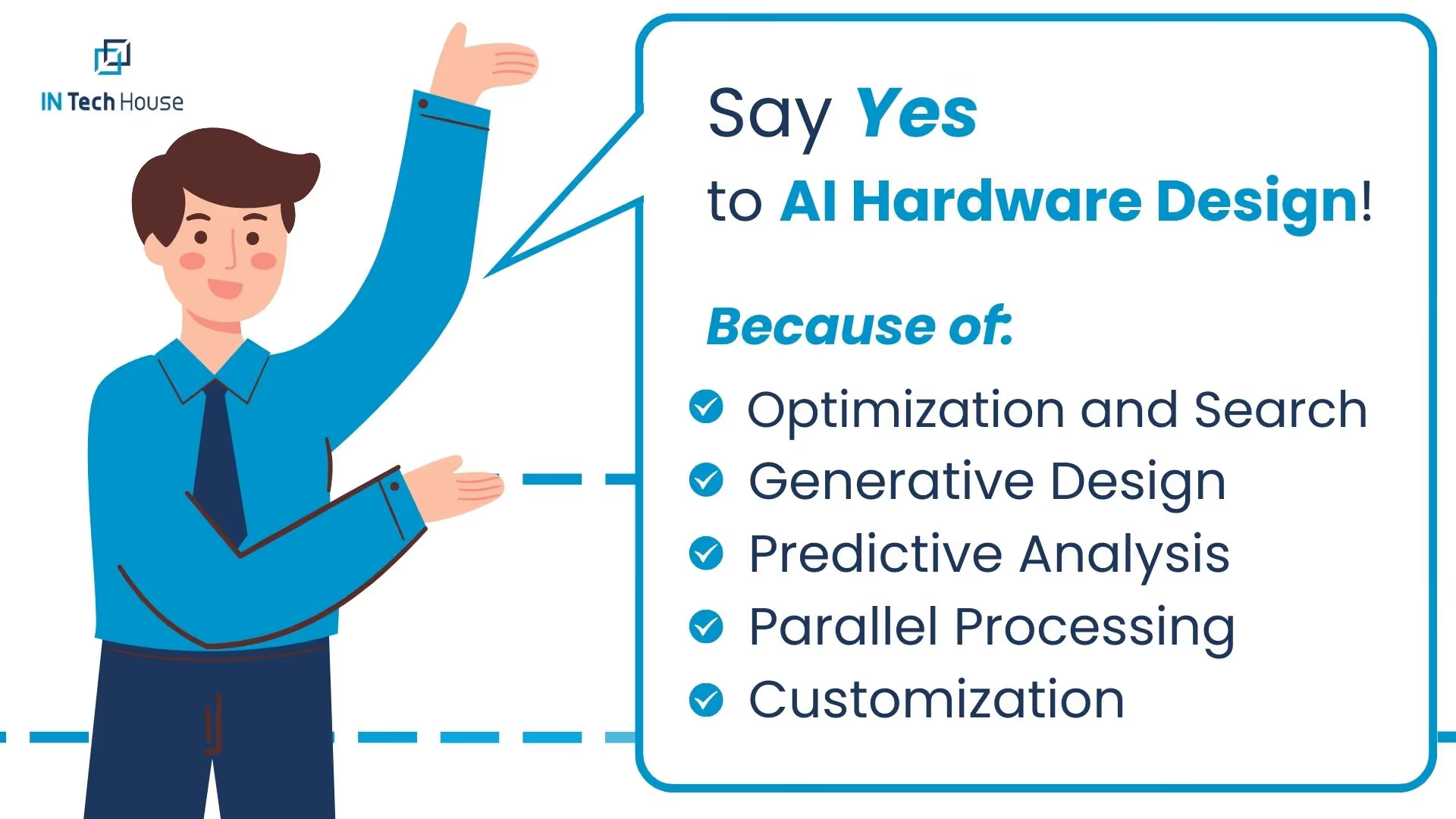
  • Optimization and Search: AI algorithms can be employed to explore vast design spaces, searching for the most efficient configurations. This includes optimizing for power consumption, speed, and cost-effectiveness.
  • Generative Design: AI can generate design variations based on specified criteria, helping engineers explore innovative solutions quickly and efficiently.
  • Predictive Analysis: AI can predict hardware failures and performance bottlenecks, enabling proactive maintenance and design improvements.
  • Parallel Processing: AI can simulate and test hardware designs at a much faster pace than human engineers, accelerating the design process.
  • Customization: AI can analyze user data and preferences to create customized and personalized devices, enhancing user experiences.
 Benefits of Using AI for Hardware Design:
  • Efficiency: AI-driven design can significantly reduce design time and errors, leading to more efficient and cost-effective hardware solutions.
  • Performance: AI-optimized hardware can achieve higher levels of performance, energy efficiency, and functionality.
  • Innovation: AI enables the exploration of novel design concepts and solutions that may not have been considered using traditional methods.
  • Cost Reduction: By minimizing errors and optimizing designs, AI can lead to cost savings in production and development.
  • Customization: AI allows for the creation of personalized hardware tailored to individual user needs and preferences.
 Challenges of Using AI for Hardware Design:
  • Data Availability: AI algorithms require large datasets for training and validation. Acquiring relevant and high-quality data can be a challenge in hardware design.
  • Privacy Concerns: Customizing hardware based on user data raises privacy issues, and striking the right balance between personalization and data privacy is essential.
  • Skill and Knowledge Gap: Transitioning to AI-driven design may require hardware engineers to acquire new skills and knowledge in AI and machine learning.
  • Ethical Considerations: Ensuring that AI algorithms are ethically designed and used is crucial to prevent biases and unintended consequences.

Adam Szychulec

Electronics Design Engineer

A technology leader specializing in hardware and embedded systems.

He has extensive experience delivering complex engineering projects for industries such as energy, military & defence, and aerospace.

His work centers on developing reliable, high-performance hardware systems designed for demanding environments and long-term industrial deployment. Adam combines deep technical expertise with practical engineering leadership, helping transform advanced embedded technologies into robust, mission-critical solutions used by global clients.

More articles by this author

Discuss your product with our R&D team

This initial conversation is focused on understanding your product, technical challenges, and constraints.

No sales pitch - just a practical discussion with experienced engineers.

By sending the form, you consent to receive email communications from InTechHouse.
Message sent successfully!
Your message has been successfully sent to our R&D team. We will respond within 1-2 business days.
Unable to send message
Need a quick clarification?
Request an initial project assessment

Share a few details about your product and context. We’ll review the information and suggest the most appropriate next step.
Tech